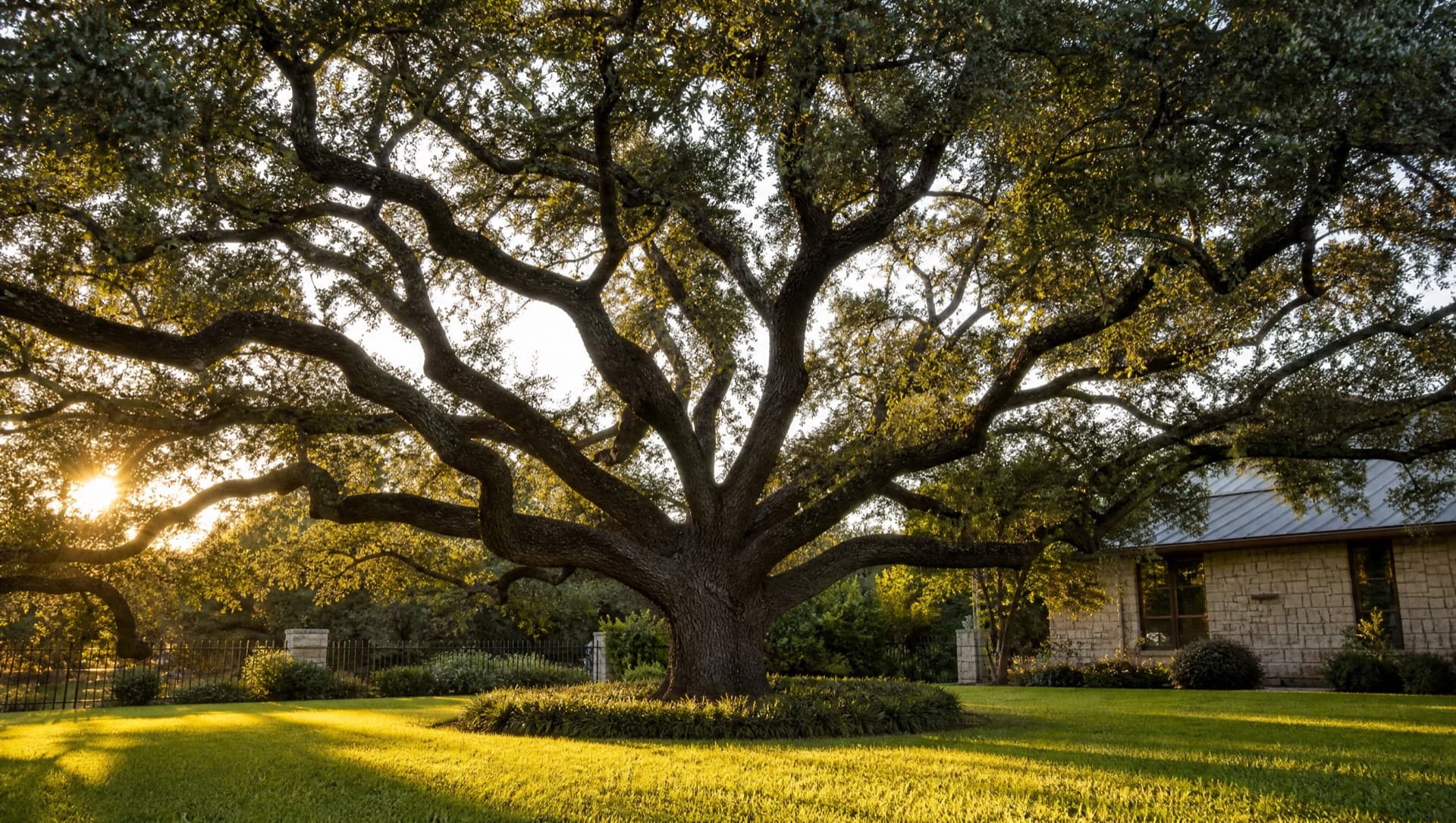
Every summer, Central Texas homeowners worry that a thinning, browning tree has died — when often it's simply stressed by drought and our relentless heat. Before you decide on removal, run these simple checks.
The Scratch Test
Scratch a small spot of bark on a twig with your fingernail. If it's green and moist underneath, the tree is alive. Brown, dry, and brittle means that branch is dead — check a few spots around the tree.
The Bend Test
Living twigs are flexible and bend before snapping. Dead ones are brittle and snap cleanly with no give.
Look for New Growth
A drought-stressed live oak or cedar elm may drop leaves to conserve water but still push fresh buds and growth when conditions improve. A total absence of new growth across the whole tree is a warning sign.
Rule Out Disease
With oaks, browning that spreads quickly through the canopy can point to oak wilt rather than simple drought — that's a different, urgent problem. Large areas of missing bark, deep cracks, and fungus also suggest serious decline.
Give It Water First
Often a deep, slow soak over the root zone during a dry spell is enough to bring a stressed tree back. When you're not sure, Raymundo Tree Service's experienced arborists can give you a definitive answer — and if it can be saved, we'll recommend trimming over removal.
Request a free tree health assessment or call (254) 366-2700 for a free, no-obligation estimate.